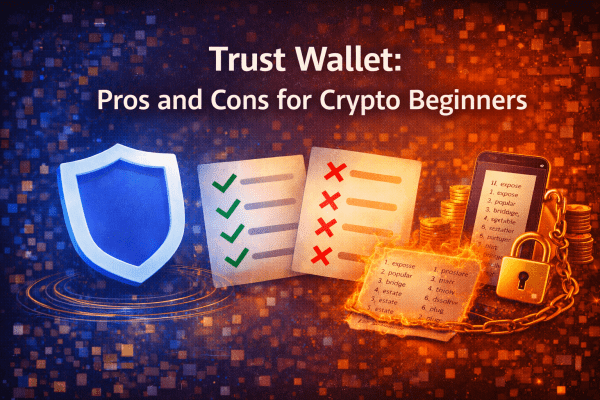
Trust Wallet: Pros and Cons for Beginners

Trust Wallet is often recommended as a first crypto wallet for beginners. It’s easy to install, supports many blockchains, and allows users to interact with DeFi, NFTs, and Web3 apps directly from a mobile phone. For someone just entering crypto, this sounds like an ideal all-in-one solution.
However, simplicity can be misleading. Many beginners lose funds not because Trust Wallet is insecure, but because they misunderstand how non-custodial wallets work. This article explains what Trust Wallet really is, where it shines, and where beginners need to be especially careful.
The goal is not to promote or discourage its use, but to help you decide whether Trust Wallet fits your level of experience and risk tolerance.
What Is Trust Wallet and How It Works
Trust Wallet is a non-custodial crypto wallet, meaning only the user controls the private keys and recovery phrase. No company, exchange, or support team can access or restore your wallet.
When you create a Trust Wallet:
- a recovery (seed) phrase is generated;
- this phrase controls all addresses and assets;
- losing it means losing access permanently.
Trust Wallet does not store accounts or passwords on servers. Everything happens locally on your device. This design gives freedom — and full responsibility.
Read more: How to Store a Seed Phrase Safely: Top Beginner Mistakes
Key Features of Trust Wallet
Trust Wallet aims to be a universal wallet for everyday crypto use.
Main capabilities include:
- storing cryptocurrencies across many blockchains;
- managing thousands of tokens automatically;
- built-in Web3 and dApp browser;
- NFT storage and viewing;
- staking for selected coins.
For beginners, having all of this in one app reduces friction when learning crypto basics.
Pros of Trust Wallet for Beginners
Easy setup with no registration
Trust Wallet does not require email, phone number, or identity verification. Installation takes minutes, making it ideal for first-time users.
Full control over funds
Because Trust Wallet is non-custodial, your assets cannot be frozen, blocked, or limited by third parties. This is a major advantage compared to centralized exchanges.
Multi-chain support
Beginners often don’t understand networks yet. Trust Wallet automatically supports multiple blockchains, allowing users to hold assets across ecosystems in one place.
Direct access to Web3
The integrated dApp browser lets users interact with DeFi platforms, NFT marketplaces, and blockchain games without additional tools.
No wallet fees
Trust Wallet itself is free. Users only pay blockchain network fees, which are unavoidable regardless of wallet choice.
Cons and Risks Beginners Often Miss
No safety net for mistakes
If you lose your recovery phrase or approve a malicious transaction, there is no way to reverse it. Trust Wallet support cannot help.
High exposure to scams
Beginners are often targeted through:
- fake airdrops;
- malicious dApps;
- phishing websites;
- NFT mint scams.
Trust Wallet does not block these automatically.
Limited security controls
Compared to hardware wallets:
- keys are stored on an internet-connected device;
- transactions don’t require physical confirmation;
- phone malware can be a real risk.
Unexpected transaction fees
On congested networks, fees can exceed the amount being transferred. Beginners often don’t understand this until it happens.
How Safe Is Trust Wallet Really?
Trust Wallet is technically secure, but user behavior determines the real risk.
Security decreases if you:
- store the recovery phrase digitally;
- install apps from unofficial sources;
- connect to unknown dApps;
- ignore token approval permissions.
Most losses are caused by human error, not software flaws.
Trust Wallet and Common Scam Scenarios
Trust Wallet is frequently used in scams such as:
- honeypot tokens that can’t be sold;
- fake staking platforms;
- malicious NFT approvals;
- wallet drainers disguised as Web3 apps.
The wallet does not protect users from bad decisions — it only executes them.
Read more: Honeypot Tokens Explained: How to Avoid Fake Coins
Who Should Use Trust Wallet
Trust Wallet is suitable if you:
- are new to crypto;
- use small or experimental amounts;
- want to explore Web3 and NFTs;
- are willing to learn basic security rules.
Who Should Avoid Trust Wallet
Trust Wallet may not be ideal if you:
- store large sums long-term;
- want maximum security without learning details;
- actively trade large DeFi positions;
- prefer hardware-level protection.
In these cases, combining a hardware wallet with a hot wallet is safer.
Common Beginner Mistakes
- Saving the recovery phrase in cloud storage
- Connecting to unknown dApps
- Approving unlimited token spending
- Sending assets on the wrong network
- Installing fake wallet apps
Almost all beginner losses follow one of these patterns.
Frequently Asked Questions
Can Trust Wallet be hacked?
The wallet itself is rarely hacked, but users are often tricked into giving access.
Can stolen funds be recovered?
Usually not. Blockchain transactions are irreversible.
Is Trust Wallet an exchange?
No. It is a wallet, not a trading platform.
Is Trust Wallet good for long-term storage?
For small amounts — yes. For large holdings — consider cold storage.
Does Trust Wallet track users?
No personal data or accounts are stored.
Final Thoughts
Trust Wallet is a solid entry-level wallet, but it is not a “safe bank.” It gives users freedom and access — along with full responsibility for mistakes.
Used carefully, it can be a powerful learning tool. Used blindly, it becomes a common point of loss for beginners.
Understanding how it works is more important than which wallet you choose.
✅ Read more:
👉 What Is a Crypto Wallet: Types and How to Choose — Trust Wallet’s place among others.
👉 What Is a Seed Phrase and Why You Shouldn’t Share It — critical security issue.
👉 How to Send Crypto Without Loss: Network, Fee, Address — risks in mobile transfers.
👉 What to Do If You Sent Crypto to the Wrong Network — common pitfalls.
👉 Cold Wallet (Ledger/Trezor): Is It Worth Buying — upgrade path for safety.
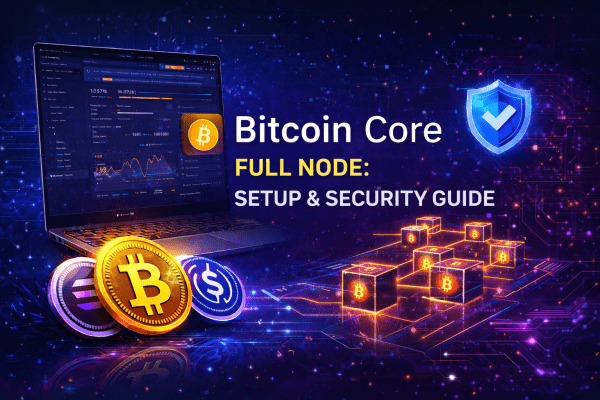
What Is Bitcoin Core? (full node software, Bitcoin protocol client, blockchain validation)
Bitcoin Core is:
✔️ The official open-source Bitcoin client
✔️ Full node software
✔️ A blockchain validation engine
✔️ A non-custodial wallet
Unlike lightweight wallets, Bitcoin Core downloads and verifies the entire blockchain independently.
This gives you:
- Maximum decentralization
- Independent transaction validation
- No reliance on third-party servers
It represents the highest level of sovereignty within the Bitcoin ecosystem.
How a Full Node Works (block validation, consensus rules, transaction verification)
When you run Bitcoin Core:
1️⃣ The entire blockchain is downloaded
2️⃣ Every block is validated
3️⃣ Every transaction is checked against consensus rules
4️⃣ Your node enforces protocol rules
Your node ensures:
✔️ No invalid blocks are accepted
✔️ No fraudulent transactions are trusted
✔️ Network rules are enforced locally
This is fundamentally different from SPV wallets like Electrum.
You don’t “trust” — you verify.
Hardware Requirements and Storage (blockchain size, SSD requirement, pruning mode)
The Bitcoin blockchain continues to grow.
Typical requirements:
✔️ 1TB SSD (recommended for future growth)
✔️ At least 8GB RAM
✔️ Stable broadband internet
✔️ Continuous uptime for full functionality
Blockchain size: Hundreds of gigabytes and increasing.
Bitcoin Core also supports pruning mode, which reduces disk usage by deleting old block data while maintaining validation ability.
However:
Pruning limits certain advanced use cases like serving historical blocks.
Is Bitcoin Core Safe for Storing BTC? (wallet encryption, private key storage, security risks)
Bitcoin Core is fully non-custodial.
Private keys:
✔️ Stored locally
✔️ Protected with wallet encryption
✔️ Not transmitted to servers
However, risks include:
🔴 Hard drive failure
🔴 Malware infection
🔴 Losing wallet.dat
🔴 No backup copy
Unlike exchange accounts, there is no password recovery.
Security depends entirely on your backup strategy.
Can Bitcoin Core Be Used for Cold Storage? (offline wallet setup, air-gapped signing, cold wallet configuration)
Yes — but with advanced setup.
You can:
✔️ Install Bitcoin Core on an offline machine
✔️ Generate addresses offline
✔️ Sign transactions without internet access
✔️ Broadcast signed transactions separately
However, this process is complex compared to using hardware wallets.
Bitcoin Core cold storage requires technical knowledge.
Fee Control and Transaction Management (mempool monitoring, fee estimation, Replace-by-Fee)
Bitcoin Core allows:
✔️ Manual fee adjustment
✔️ Automatic fee estimation
✔️ Replace-by-Fee (RBF)
✔️ Child-Pays-For-Parent (CPFP)
Advanced users can monitor mempool congestion and optimize transaction timing.
This level of control is attractive for large BTC transfers.
Bitcoin Core vs Lightweight Wallets
Bitcoin Core:
✔️ Maximum independence
✔️ Full validation
✔️ Higher hardware requirements
Electrum:
✔️ Lightweight
✔️ Fast startup
✔️ Relies on remote servers
Core is ideal for decentralization purists.
Electrum balances convenience and control.
Who Should Run Bitcoin Core?
Bitcoin Core is ideal for:
- Long-term Bitcoin holders
- Privacy-conscious users
- Advanced users
- Node operators
- Developers
It may not be ideal for:
❌ Beginners
❌ Users with limited disk space
❌ People seeking convenience
Running a node is a commitment.
Real Risks and Limitations
Running Bitcoin Core carries responsibilities:
🔴 Large storage consumption
🔴 Long initial sync time
🔴 Technical complexity
🔴 Backup management
🔴 System maintenance
Improper backups can result in permanent loss.
Best Practices for Secure Operation
✔️ Encrypt your wallet
✔️ Back up wallet.dat regularly
✔️ Store backups offline
✔️ Use a dedicated machine
✔️ Keep software updated
✔️ Consider hardware wallet integration
Security is operational, not automatic.
Frequently Asked Questions
Is Bitcoin Core better than a hardware wallet?
Different purpose. Hardware wallets are easier for cold storage.
Can I store large amounts safely?
Yes — with proper backups and security hygiene.
Does Bitcoin Core support altcoins?
No. It is Bitcoin-only.
Do I need to run it 24/7?
Not necessarily, but uptime improves network contribution.
Is running a node profitable?
No direct profit — it strengthens decentralization.
Final Verdict
Bitcoin Core represents:
✔️ Maximum decentralization
✔️ Full blockchain verification
✔️ Ultimate self-sovereignty
But it requires:
- Technical understanding
- Hardware resources
- Backup discipline
It is not the easiest wallet — but it is the most independent.
For Bitcoin maximalists and long-term holders who value sovereignty, Bitcoin Core remains the gold standard.
✅ Read more:
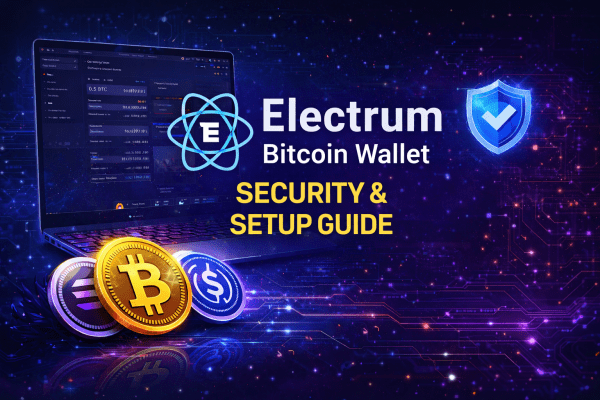
What Is Electrum? (Bitcoin-only wallet, SPV wallet, lightweight client)
Electrum is a Bitcoin-only, non-custodial wallet first released in 2011.
It is classified as an SPV (Simplified Payment Verification) wallet, meaning:
✔️ It does not download the entire Bitcoin blockchain
✔️ It connects to external servers
✔️ It verifies transactions efficiently
This makes it:
- Lightweight
- Fast
- Resource-efficient
Unlike full-node wallets like Bitcoin Core, Electrum is optimized for speed without sacrificing private key control.
How Electrum Works (seed phrase recovery, private key signing, Bitcoin addresses)
When you create a wallet:
1️⃣ A seed phrase is generated
2️⃣ Private keys are derived from the seed
3️⃣ You choose address type (Legacy, SegWit, Native SegWit)
4️⃣ Transactions are signed locally
5️⃣ Signed data is broadcast to the Bitcoin network
Electrum allows advanced configurations such as:
✔️ Custom fee settings
✔️ Replace-by-Fee (RBF)
✔️ Multi-signature wallets
✔️ Watch-only wallets
These features make it attractive for experienced Bitcoin users.
Read more: Seed Phrase: What It Is and Why You Must Never Share It
Is Electrum a Hot or Cold Wallet? (cold storage setup, air-gapped wallet, offline signing)
By default, Electrum is a hot wallet because it runs on an internet-connected device.
However, it can be configured as:
✔️ Cold storage wallet
✔️ Air-gapped signing solution
✔️ Offline transaction signer
Advanced users can:
- Install Electrum on an offline computer
- Generate and store keys offline
- Sign transactions without internet access
This makes Electrum extremely flexible compared to many mobile wallets.
Read more: Hot Wallets in Crypto: How They Work and Are They Safe?
Read more: Cold Wallet (Ledger / Trezor): Is It Worth Buying?
Electrum Fee Control Explained ( Bitcoin transaction fees, mempool analysis, manual fee adjustment)
One of Electrum’s strongest features is fee customization.
You can:
✔️ Set dynamic fees based on network congestion
✔️ Adjust satoshis per byte manually
✔️ Monitor mempool conditions
✔️ Enable Replace-by-Fee (RBF)
How to lower Bitcoin transaction fees in Electrum?
Answer:
Set a lower sat/vByte rate and wait longer for confirmation.
This level of control is rarely available in beginner wallets.
How Secure Is Electrum? (phishing risks, malicious servers, software verification)
Electrum is secure if:
✔️ Downloaded from the official source
✔️ Verified via GPG signature
✔️ Used on a clean operating system
Primary risks include:
🔴 Fake download websites
🔴 Phishing update prompts
🔴 Compromised desktop systems
🔴 Malicious Electrum servers
Electrum has experienced phishing attempts in the past via malicious servers displaying fake upgrade alerts.
Security rule:
Always verify the download and never install updates via pop-up messages.
Electrum and Hardware Wallets (Ledger integration, Trezor compatibility, secure key management)
Electrum supports integration with:
✔️ Ledger
✔️ Trezor
✔️ Other hardware wallets
This allows:
- Offline private key storage
- Advanced transaction management
- Cold storage security with desktop flexibility
Combining Electrum with hardware wallets creates a highly secure setup.
Who Should Use Electrum?
Electrum is ideal for:
- Bitcoin-only investors
- Advanced users
- Those who want fee control
- Multi-signature setups
- Users running their own node
It may not be ideal for:
❌ Beginners seeking simple UI
❌ Users managing multiple altcoins
❌ People unwilling to verify downloads
Electrum prioritizes control over simplicity.
Electrum vs Bitcoin Core
Electrum:
✔️ Lightweight
✔️ Fast setup
✔️ Lower storage requirements
Bitcoin Core:
✔️ Full node validation
✔️ Maximum decentralization
✔️ Requires full blockchain download
Electrum balances convenience and control.
Real-World Risk Scenarios
Potential loss cases:
🔴 Seed phrase exposure
🔴 Installing fake versions
🔴 Malware-infected system
🔴 Losing backup
Electrum does not provide account recovery via email.
If you lose your seed phrase, funds are unrecoverable.
Best Security Practices
✔️ Download only from official site
✔️ Verify digital signatures
✔️ Store seed phrase offline
✔️ Use hardware wallet integration
✔️ Avoid auto-connecting to unknown servers
✔️ Run your own Electrum server for maximum control
Security in Bitcoin requires discipline.
Frequently Asked Questions
Is Electrum safe for long-term storage?
Yes, especially when used with hardware wallets or offline setup.
Can Electrum store altcoins?
No — it is Bitcoin-only.
Is Electrum better than mobile wallets?
For advanced control, yes.
Can hackers steal funds?
Only if private keys or seed phrases are exposed.
Should beginners use Electrum?
It depends — it has a steeper learning curve.
Final Verdict
Electrum is:
✔️ Powerful
✔️ Lightweight
✔️ Bitcoin-focused
✔️ Highly customizable
But it requires:
- Technical understanding
- Security awareness
- Proper download verification
For Bitcoin maximalists and advanced users, it remains one of the strongest wallet options available.
For beginners, simpler wallets may be more appropriate.
Crypto security is about control — and Electrum gives you full control.
✅ Read more:
- 👉 Exodus Desktop Wallet Review — beginner-friendly alternative.
- 👉 Hardware Wallets for Maximum Protection — cold storage guide.
- 👉 Hot Wallets in Crypto: Security & Risks — online storage basics.
- 👉 What Is a Seed Phrase and Why It Matters — recovery fundamentals.
- 👉 Exchange Wallets: Risks and Benefits — custodial comparison.
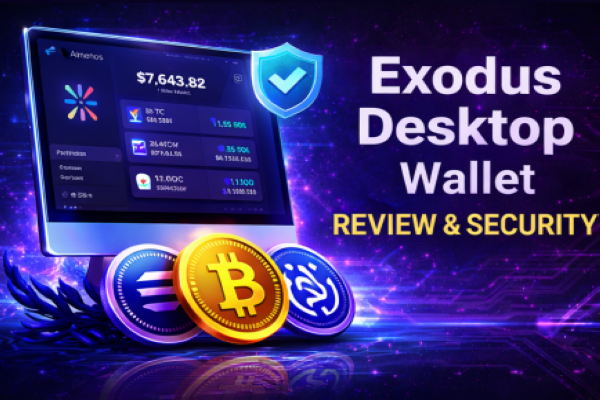
What Is Exodus Desktop? (desktop crypto wallet, non-custodial wallet, local key storage)
Exodus Desktop is a non-custodial desktop wallet, meaning:
✔️ You control your private keys
✔️ You manage your recovery phrase
✔️ No centralized server holds your funds
It is classified as a hot wallet because it runs on an internet-connected computer.
Unlike exchange wallets, Exodus does not have custody over your assets.
However, unlike hardware wallets, it does not isolate private keys offline by default.
How Exodus Desktop Works (seed phrase generation, private key encryption, transaction signing)
When you install Exodus Desktop:
1️⃣ A recovery phrase is generated locally
2️⃣ Private keys are derived from the seed
3️⃣ Keys are encrypted and stored on your computer
4️⃣ Transactions are signed locally
5️⃣ Signed transactions are broadcast to the blockchain
Important:
🔐 Private keys never leave your machine.
But if your machine is compromised, so is your wallet.
Security Analysis: Is Exodus Desktop Safe? (malware risk, computer security, phishing attacks)
Exodus Desktop security depends on:
✔️ Operating system security
✔️ Malware protection
✔️ Safe browsing habits
✔️ Secure seed phrase storage
Common risks include:
🔴 Keyloggers
🔴 Clipboard hijacking malware
🔴 Malicious browser extensions
🔴 Fake Exodus installers
Desktop environments are generally more exposed than mobile systems due to broader attack surfaces.
Security is only as strong as the device running the wallet.
Read more: Seed Phrase: What It Is and Why You Must Never Share It
Hardware Wallet Integration (Trezor support, hardware wallet connection, cold storage integration)
One major advantage of Exodus Desktop:
It supports Trezor hardware wallet integration.
This allows:
✔️ Offline private key storage
✔️ Secure transaction signing
✔️ Enhanced cold storage protection
✔️ Convenient interface for hardware users
Using Exodus with a hardware wallet significantly reduces risk.
Without hardware integration, it remains a hot wallet.
Read more: Cold Wallet (Ledger / Trezor): Is It Worth Buying?
Supported Assets and Features (multi-asset wallet, ERC-20 tokens, portfolio tracking)
Exodus Desktop supports:
- Bitcoin
- Ethereum
- Solana
- Litecoin
- Polygon
- Multiple ERC-20 tokens
Additional features include:
✔️ Built-in exchange
✔️ Portfolio tracking dashboard
✔️ Asset visualization
✔️ Custom fee options (on select networks)
It is designed for users managing diversified portfolios.
Real Risks of Using Exodus Desktop
Despite being non-custodial, risks include:
🔴 Compromised operating system
🔴 Storing seed digitally
🔴 Installing unofficial versions
🔴 Phishing emails pretending to be support
Exodus cannot recover lost funds if private keys are exposed.
There is no password reset in self-custody wallets.
Who Should Use Exodus Desktop?
Exodus Desktop is suitable for:
- Users managing multiple assets
- Portfolio trackers
- Trezor hardware users
- Intermediate crypto holders
It is less suitable for:
❌ Storing life savings without hardware
❌ Users unfamiliar with malware protection
❌ Institutional cold storage
For large holdings, combining it with a hardware wallet is strongly recommended.
Exodus Desktop vs Mobile Version
Desktop advantages:
✔️ Larger interface for portfolio management
✔️ Hardware wallet integration
✔️ Advanced settings
Mobile advantages:
✔️ Portability
✔️ Quick access
✔️ Biometric authentication
Both are hot wallets unless paired with hardware.
Best Practices for Secure Setup
✔️ Download only from the official website
✔️ Verify installer when possible
✔️ Write recovery phrase offline
✔️ Use a strong system password
✔️ Keep operating system updated
✔️ Avoid installing unknown browser extensions
Security is layered — not automatic.
Frequently Asked Questions
Is Exodus Desktop custodial?
No — you control the private keys.
Can Exodus Desktop freeze funds?
No — it is non-custodial.
Is it safe for long-term storage?
Only if paired with a hardware wallet.
Can it be hacked?
The software itself is secure, but a compromised computer can expose keys.
Is it better than keeping crypto on an exchange?
Yes — because you control the private keys.
Final Verdict
Exodus Desktop is:
✔️ User-friendly
✔️ Multi-asset
✔️ Non-custodial
✔️ Hardware-compatible
But by default, it remains a hot wallet.
For everyday portfolio management, it works well.
For serious long-term protection, combine it with cold storage.
Crypto security is not about one wallet — it’s about a layered strategy.
✅ Read more:
 Security Hub1 month ago
Crypto Scam Red Flags: How to Spot a Fake Project (Before You Lose Money)
- Security Hub1 month ago
Rug Pull Explained: How Liquidity Scams Work in Crypto
- Security Hub1 month ago
Technical Scam Signs in Token Code: Red Flags Guide
- Security Hub1 month ago
Honeypot Tokens Explained: How to Avoid Fake Coins
- Security Hub1 month ago
Crypto Project Verification Checklist (Step-by-Step)
- Security Hub1 month ago
How to Find a Token Contract and Avoid Fake Copies
- Security Hub1 month ago
No Liquidity Lock: How to Spot a Crypto Scam Early
- Security Hub1 month ago
Dangerous Smart Contract Functions: how scammers trap investors